
To make a lyric sheet, type out every word of your song in order, label each section (Verse 1, Chorus, Bridge), write out every repeat of the chorus in full, and add the title, writers and date at the top. For recording sessions, add line numbers, plenty of space and a clear layout so you can mark takes and fixes as you go.
Most lyric sheet guides stop at formatting. This one goes further — into how a lyric sheet becomes one of the most useful tools you have when you’re recording your own vocals.
What a lyric sheet is (and what it’s for)
A lyric sheet is a clean, written copy of a song’s words, laid out section by section. Songwriters use it to:
- share the song with co-writers, singers and collaborators;
- document the final version of the words;
- guide recording sessions, so every take is checked against the same text;
- keep track of edits when lines change.
It’s different from a chord chart, which focuses on harmony, though some songwriters combine the two.
What to include on a lyric sheet
The header
At the top of the page:
- Song title
- Writers’ names
- Date (and version, if the lyrics have changed)
- Optional: key, tempo, and a note like “work tape version” or “final”
The body
- Section labels: Verse 1, Pre-Chorus, Chorus, Verse 2, Bridge, Outro.
- Every line in order, as sung.
- Every repeated chorus written out, not “Chorus x2.” If the words change slightly on a repeat, that’s exactly what this catches.
- Consistent capitalization and punctuation, so it reads clearly.
Lyric sheet format: a simple template
Here’s a layout that works for most songs:
SONG TITLE
Written by: Name, Name
Date: 2026-10-28   Version: 2

[VERSE 1]
1  First line of the verse
2  Second line of the verse
3  Third line of the verse
4  Fourth line of the verse

[CHORUS]
5  First line of the chorus
6  Second line of the chorus
7  Third line of the chorus
8  Fourth line of the chorus

[VERSE 2]
9  ...
Formatting tips that make it readable
- Use a clear font at a decent size. You’ll be reading it from a music stand or a screen.
- Leave space between sections, and a little margin on the right for notes.
- Keep it to one or two pages. If it runs longer, reduce the font slightly before you cut white space.
- Avoid decorative layouts. Function beats style here.
Turning your lyric sheet into a session tool
This is where a lyric sheet earns its place in the studio.
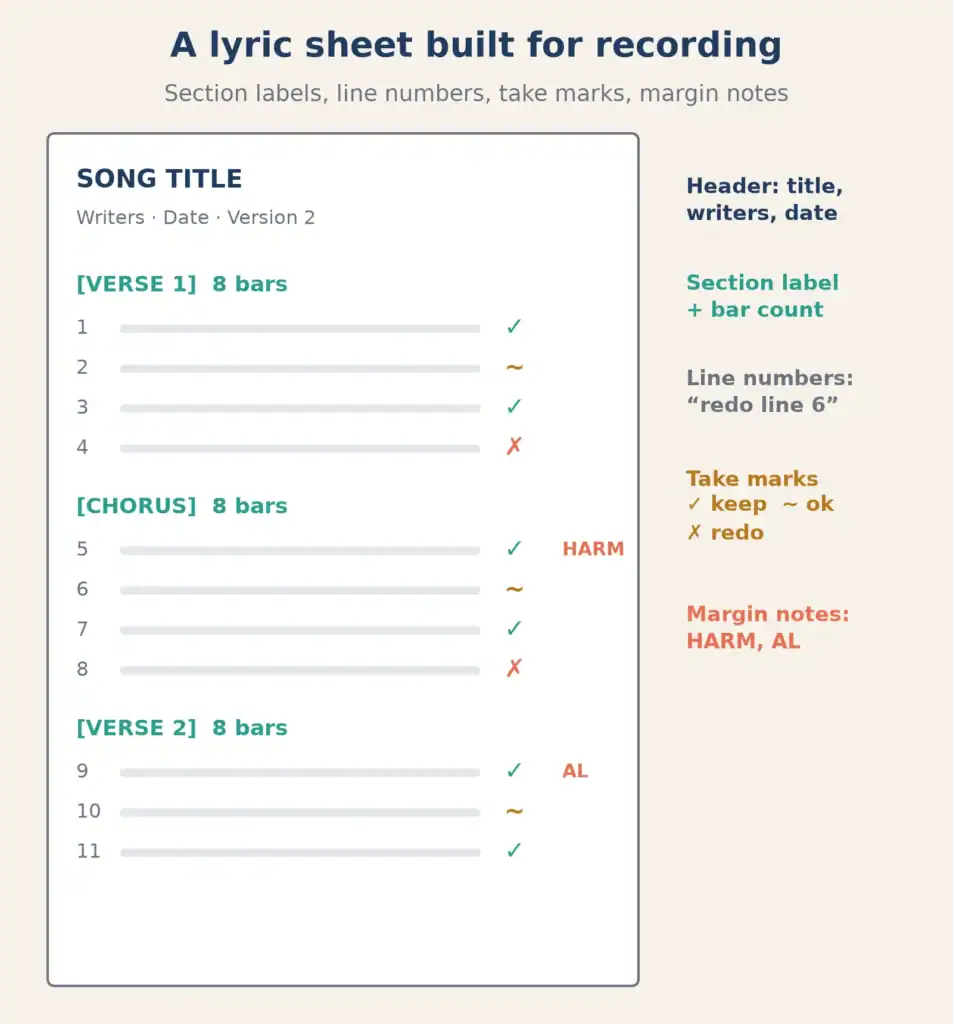
Number every line
Line numbers make communication fast. “Can we redo line 14?” is far clearer than “the bit about the river in the second verse.” Even if you’re recording yourself, numbers make notes easy to write.
Print a fresh copy for each session
Make a clean “session copy” you’re willing to scribble on. Keep your master copy clean.
Mark takes and keepers as you record
As you record vocal takes, mark the sheet. A simple system:
- ✓ — great line, keep it
- ~ — usable, could be better
- ✗ — needs another pass
After three or four takes, your marks show you exactly which lines to punch in and which take to use for each section.
Note harmonies, doubles and ad-libs
Use the margin to mark where you plan to add harmonies, where you’ll double a line, and where an ad-lib might go. When you come to record those parts, the plan is already written.
Track lyric changes
If you change a word during the session, cross it out and write the new one, then update the master copy afterward. Date the new version so nobody sings an old line.
A lyric sheet for a scratch vocal vs a final vocal
For a scratch vocal, you just need the words in order and the sections labelled — it’s a guide. For the final lead, the full session version earns its keep: line numbers, take marks and margin notes.
Lyric sheets for sharing and release
Once a song is finished, the lyric sheet travels with it. Pair it with your work tape when sharing with co-writers, so the recording and the words always match. Before you put a song out, it’s worth reading Songsmith’s checklist of things to do before posting your music.
If you’re still shaping the words themselves, Songsmith’s 11 steps to writing a song is a good place to work through the writing process.
FAQ
What is a lyric sheet?
A lyric sheet is a written or typed copy of a song’s words, organized by section, used to share, document and record the song.
How do you format a lyric sheet?
Put the title, writers and date at the top, label every section, write out each line in order, and spell out every repeated chorus in full.
Should I write “Chorus x2” on a lyric sheet?
It’s better not to. Writing every chorus in full avoids confusion and catches small lyric changes between repeats.
Should a lyric sheet include chords?
It can, but a lyrics-only sheet is easier to read while singing. Many songwriters keep a separate chord chart.
What’s the best way to use a lyric sheet when recording vocals?
Number every line, print a session copy, and mark which lines are keepers after each take. It turns comping and fixing into a quick job.